
The simple locate: $200–$400
Short accessible runs: confirmed, pinpointed, marked without ceremony.
The water bill knows something you don’t. Somewhere under a slab or behind a wall in Dee Why, a pipe is quietly feeding the ground, and finding it with instruments instead of a jackhammer is the difference between lifting three tiles and gutting a bathroom. We locate to centimetres, then repair through one deliberate hole.
A concealed leak cannot keep all three of its secrets. It makes a sound, pressurised water escaping sings in frequencies acoustic gear tracks along the pipe. It changes temperature, the wet path, or the warm plume of a leaking hot line, paints itself across thermal imaging. And it loses pressure, isolate the pipework section by section against a gauge, and the guilty run confesses while the innocent ones hold steady.
One signal narrows it; three signals convict. Where the readings intersect we mark the surface, and that mark is routinely metres from where instinct says to dig, especially under Dee Why’s renovated homes, where pipe runs wander in ways no drawing ever recorded. Every centimetre of accuracy is a tile that stays on the floor.

Dee Why’s sandy coastal ground migrates into any cracked stormwater or sewer line, settling in low spots and building sandbanks inside the pipe.
In free-draining ground the useful methods are the ones that do not depend on seeing water: isolating sections and watching the meter, listening for the sound a pressurised leak makes through the soil, and tracer gas where acoustics are inconclusive.
It is slower than following a wet patch and far cheaper than excavating on a guess.
Dee Why (postcode 2099) is the busy heart of Sydney’s Northern Beaches, running from Dee Why Lagoon and the beachfront Strand back up Pittwater Road toward Narraweena, Cromer and Collaroy. Its mix of 1960s red-brick walk-ups and new apartments keeps thousands of people on ageing shared drains, and keeps local plumbers busy.
Close to the water the ground is frequently wet regardless of any plumbing fault, which removes the most obvious diagnostic anybody has. Damp subfloor, moisture in the slab edge and standing water in a trench prove nothing here.
So detection near the water leans on isolation and the meter rather than observation, and on tracer gas where a leak is genuinely hidden by ambient groundwater.
The cafes and restaurants along The Strand and Oaks Avenue push serious volumes of fat and food waste, which congeals in shared lines behind the shops.
The technical question and the financial question have different answers, and both need settling. Pipework serving only your lot is yours; risers, mains and common-property lines belong to the owners corporation.
A leak detection report that names the line, the lot and the direction of travel is what turns a dispute into a decision. That is what we write, because a description of where the water appeared settles nothing.
Older walk-ups off Pittwater Road still drain through original cast-iron and clay stacks; decades of scale and grease narrow them until one flush too many blocks the whole riser.
A persistent sewer smell around a property with no obvious source is worth investigating properly. It usually means either a dry or failed trap, or a break in a line venting where it should not.
A smoke test finds both quickly, introduce smoke into the system and watch where it emerges. It is unglamorous, cheap, and conclusive in a way that sniffing around is not.
Sand drains freely, which means a leak that would create an obvious wet patch in clay produces nothing visible at all. The water simply goes down and away, and the first sign is the bill.
It is the main reason we rely on the meter test and acoustic work here rather than looking for surface evidence. Absence of a wet patch proves very little in this ground.
Corrosion works faster in humid, salt-carrying air, and the parts that fail earliest are the small ones: tap bodies, external fittings, and the connections around a hot water unit.
Many of the leaks we find on properties near the water are not in the pipework at all but at a fitting that has been quietly corroding in plain sight. They are also the cheapest to put right, if found before they let go.
It is free, it takes an hour, and it settles whether you have a leak at all. Turn off every tap and appliance that uses water, then read your meter, including the smallest dial or digits.
Come back an hour later without using anything. If the reading has moved, water is leaving the property somewhere. If it has not, whatever you are seeing is not a pressurised leak, and that rules out a large and expensive category before you spend anything.
Short accessible runs: confirmed, pinpointed, marked without ceremony.
First hour with the full kit, pressure isolation, thermal, acoustic, on a typical concealed leak.
Extended runs, awkward access and multi-leak eliminations, beyond hour one.
Deep slab lines and multi-storey tracing at the top of the Sydney range.
Quoted off exactly what detection found, repaired through the marked spot, same crew, same visit, one call-out.
Compare it with exploratory demolition, which costs more than detection before it has even guessed right once. Figures here are indicative of the 2026 Sydney market rather than a quote from us, you get your own number as a fixed price before any work starts.

Meter protocol, bills, history. If the evidence says no supply leak, you hear that for free, not a finding fee for nothing.
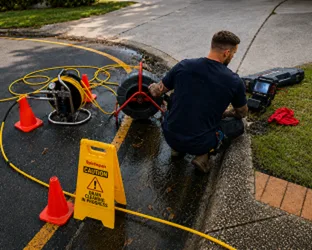
Section-by-section pressure isolation, hot against cold, run against run, until exactly one line owns the loss.

Thermal and acoustic sweeps along the guilty run until the signals stack on one spot. That mark is where, and only where, we open.

Access at the mark, section repaired, pressure re-tested, surface closed. A run in terminal condition gets reroute numbers before, not after.
Then the leak is real and already on the clock. Book the detection before it surfaces somewhere expensive.
Instruments, a mark on the floor, one hole, one fix: and the meter finally standing still.

Leave your details and our local Dee Why team will call you back fast.