
Common repairs, $150–$600
Elements, thermostats, thermocouples, relief valves: the parts that actually fail, fixed in a single visit. Most no-hot-water calls land here.
Cold water at 6am feels terminal, but the autopsy usually finds a $40 part, not a dead system. We test before we talk replacements, carry the common failures on the van, and put Dee Why households back under hot showers the same day, saving the new-system quote for tanks that have honestly earned one.
Most of the no-hot-water calls we take in Dee Why end in a repair, not a skip bin. Electric systems lose elements and thermostats; gas systems lose thermocouples and pilot assemblies; continuous-flow units throw error codes that mean a sensor or a flow problem, not a dead unit. Those are parts, they are stocked on the van, and the fix is measured in hours.
The industry default is the opposite, quote a shiny new system to anyone whose water went cold, because a replacement is worth ten times a thermostat. We diagnose first. A five-year-old tank with a failed element deserves an element. What it does not deserve is a $2,000 replacement because someone could not be bothered testing a $40 part.

Dee Why (postcode 2099) is the busy heart of Sydney’s Northern Beaches, running from Dee Why Lagoon and the beachfront Strand back up Pittwater Road toward Narraweena, Cromer and Collaroy. Its mix of 1960s red-brick walk-ups and new apartments keeps thousands of people on ageing shared drains, and keeps local plumbers busy.
Plenty of homes in this bracket are still on a controlled-load tariff heating a large tank overnight. It made excellent sense when it was installed and it is worth re-examining now.
If you routinely run out of hot water by evening, the tank is being sized for a household that no longer exists, and the fix may be a tariff and sizing decision rather than a repair.
Efficient replacements are often simply unavailable in a block. energy.gov.au notes gas heaters are usually installed outdoors because of venting requirements, and heat pumps need open air to draw from, neither of which a third-floor cupboard offers.
For food premises hot water is not a comfort, it is a condition of trading. Hand wash basins must deliver warm water at all times the business operates, and an inspector finding otherwise can act on it the same day.
That changes the priority when a commercial unit fails. It is not a scheduled repair, it is the difference between opening and not, and we treat it that way.
Isolating one apartment without dropping hot water to the rest of the building, and getting strata approval where the system sits on common property, usually takes longer than the plumbing itself.
Units mounted outside in a humid, water-adjacent setting corrode at the casing and the fittings well before the cylinder itself gives up. The failure looks sudden and has usually been visible for a year to anyone who looked.
A five-minute look at the top fittings and the base of the casing once a year is the entire maintenance requirement, and it reliably converts an emergency into a planned replacement.
The cafes and restaurants along The Strand and Oaks Avenue push serious volumes of fat and food waste, which congeals in shared lines behind the shops.
In an apartment this is the first question, because it decides who arranges and pays for everything that follows. A unit inside your lot serving only your apartment is yours. A central plant serving the building, or a unit sitting on common property, is the owners corporation's.
Check your strata plan before you authorise work, not after. It is the difference between a bill you owe and one you can hand on.
Areas built as one wave tend to have been re-fitted in waves too, which is why neighbours often find themselves replacing hot water systems within a year or two of each other.
If yours went in when the last owner renovated and that was fifteen years ago, it is living on borrowed time regardless of how well it is behaving today.
Elements, thermostats, thermocouples, relief valves: the parts that actually fail, fixed in a single visit. Most no-hot-water calls land here.
Gas valves, control boards on continuous-flow units, and bigger jobs on systems still worth the spend.
Like-for-like replacement when the tank is done. Gas storage runs $1,200–$2,200 installed.
Endless hot water, no tank to rust, and it frees the space the cylinder occupied.
After rebates. Costs the least to run of the lot, worth the numbers conversation on any replacement, not just the green one.
You see the repair number and the replacement number together, the decision is yours, made with both in hand. Figures here are indicative of the 2026 Sydney market rather than a quote from us, you get your own number as a fixed price before any work starts.

System type, age, and what it is doing: that is usually enough to bring the likely part on the van and tell you honestly whether today ends in hot water.
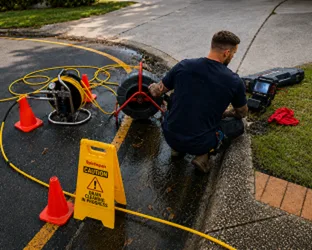
Elements get metered, thermostats tested, gas components checked in sequence. The diagnosis is what the meter says, not what sells best.
A repairable fault gets repaired on the spot. A dying tank gets you the repair price and the replacement price side by side, and the call stays yours.
If it is a replacement: delivered, installed to spec: tempering valve, relief drain, compliant connections: old unit carted away, hot water the same day in most cases.
Call before 10am and in most cases the water is hot again tonight. Describe the system and we bring the likely fix on the van.
Same-day repairs, straight replace-versus-repair numbers, and a fixed price before work starts.

Leave your details and our local Dee Why team will call you back fast.