
Flexible hose & connector fixes, $100–$200
The brittle connector behind the cooktop, small part, common leak source, quick fix.
Gas does not grade on a curve. A connection is either tested and certified or it is a liability with a warranty problem, so every gas job we do across Dee Why, from a cooktop swap to a full outdoor kitchen line, ends the same way: needle steady on the manometer, appliances burning blue, paperwork done.
NSW law reserves every millimetre of gas work for licensed gasfitters, connecting an oven included, because gas fails differently to water. A water mistake stains a ceiling; a gas mistake is a leak you breathe, a fire you host, or carbon monoxide you never smell. It is no coincidence that the leaks we chase most often trace back to a confident handyman and a roll of thread tape.
The licence is not the paperwork, it is the finish line it enforces: the whole installation held against a manometer until the needle stays put, appliances burning correctly with the ventilation they need, work done to AS/NZS 5601, the standard your insurer will ask about if it ever matters. Across Dee Why and the Northern Beaches, that gauge test is how every one of our gas jobs ends.


Dee Why (postcode 2099) is the busy heart of Sydney’s Northern Beaches, running from Dee Why Lagoon and the beachfront Strand back up Pittwater Road toward Narraweena, Cromer and Collaroy. Its mix of 1960s red-brick walk-ups and new apartments keeps thousands of people on ageing shared drains, and keeps local plumbers busy.
Homes of this period were frequently the first generation plumbed for gas from the outset, which means the original installation is now well past the age at which anything else in the house would have been replaced.
It does not follow that it is unsafe. Steel pipework properly installed lasts a long time. It does follow that nobody should assume its condition without testing it.
Every job finishes on a pressure test with a certificate. Gas has no visible half-finished state: an installation either holds and is certified, or it is not complete.
Gas in a commercial kitchen is a different regime from a domestic one, interlocked ventilation, larger loads, appliance isolation requirements, and inspection obligations that fall on the operator rather than the plumber.
The practical consequence is that a commercial installation cannot be extended casually. Adding a wok burner changes the load, the ventilation calculation and the certification, and all three have to move together.
Sizing is the quiet failure. Adding an appliance to a line that was adequate for the original load can starve everything else on it, so we check what the existing run can actually carry before extending it.
Pool heaters, outdoor fires and alfresco appliances are common on waterfront properties, and they are the largest gas loads most homes ever add. A pool heater alone can exceed the rest of the house combined.
So the first question is never the appliance, it is whether the meter and the run can carry it. That gets established before anything is ordered, because the alternative is an expensive heater that never reaches temperature.
The cafes and restaurants along The Strand and Oaks Avenue push serious volumes of fat and food waste, which congeals in shared lines behind the shops.
In a block, the supply to the building and the risers are common property; the pipework and appliances inside your lot are generally yours. Individual meters may sit in a common meter room, which frequently confuses the question of access.
Establish it before arranging work. Anything on common property needs the owners corporation to authorise it, and a plumber cannot simply proceed because a resident asked.
A gas appliance can keep working for decades after the standard it was built to has been superseded. Old wall furnaces and unflued heaters are the ones worth attention, because their failure mode is carbon monoxide rather than an obvious fault.
If a heater of that vintage is still in service, have it tested rather than assumed. It is an inexpensive check and it is the one category of gas appliance where the risk is genuinely invisible.
The brittle connector behind the cooktop, small part, common leak source, quick fix.
Leaks at threads, valves and joints: found, sealed properly, retested under pressure.
Corroded or damaged runs cut out and replaced. Concealed lines needing access run $800–$2,500.
Cooktop, oven or heater connected, tested and certified. More if a new line or bayonet has to be run to reach it.
The going Sydney range for licensed gas work in 2026, with call-out fees typically $80–$150.
The receipt that matters is not paper: it is the needle on the manometer refusing to drop. Figures here are indicative of the 2026 Sydney market rather than a quote from us, you get your own number as a fixed price before any work starts.
A suspected leak starts with isolation at the meter and ventilation, before diagnosis, before anything. No reading is worth taking on an installation still feeding a leak.
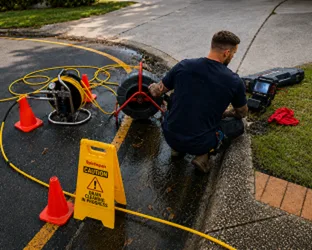
A manometer pressure test tells us the installation is losing gas; gas detection equipment and controlled testing narrow it to the joint, fitting or run responsible.
The failed component or section is replaced, not doped up and hoped over, to AS/NZS 5601, whether that is one connector or a rerun line.
The whole installation holds pressure or the job is not finished. Appliances are relit and checked for correct burning, and you get the compliance side documented.
Nor should it, legally. One visit: connected, tested, certified, warranty intact. The proper way is also the cheap way, counted honestly.
Licensed hands, a passing pressure test, and the certificate to prove it. Smelling gas this minute? 131 909 from outside comes before this form.

Leave your details and our local Dee Why team will call you back fast.